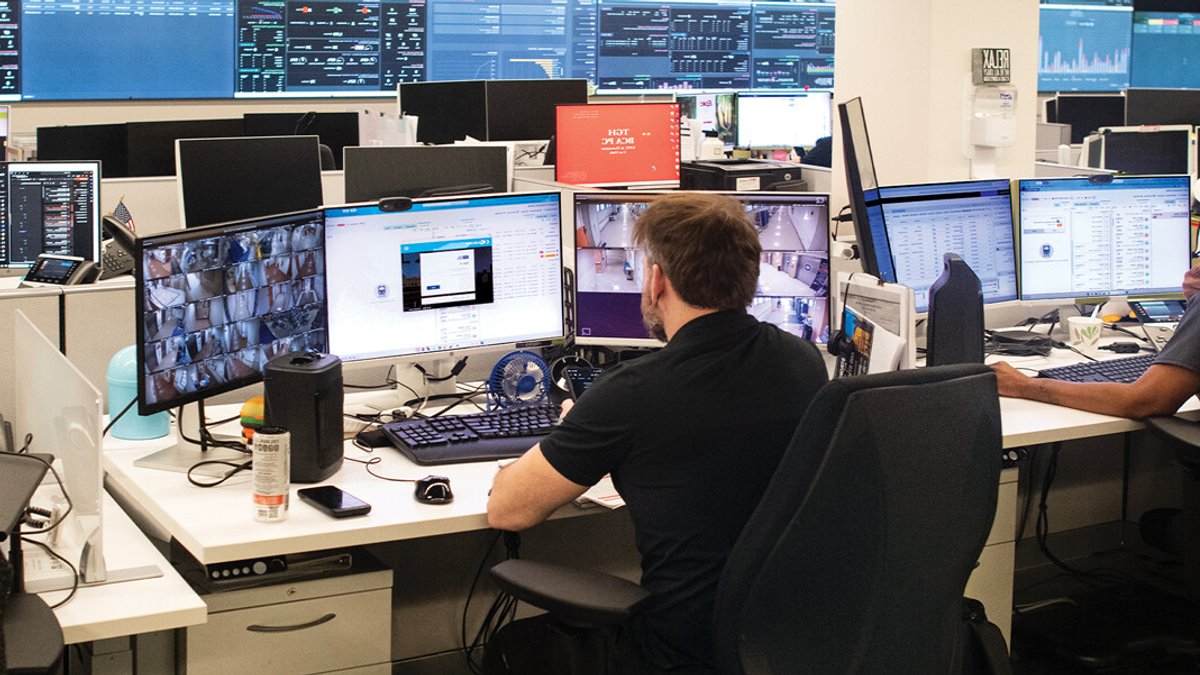
Tampa General Hospital’s newly designed care coordination center is being hailed as a model for improving patient flow and outcomes across the health system.
Command hub centralizes operations
Opened in 2019 through a partnership with GE Healthcare, the 8,000‑square‑foot space replaces a former data center that the hospital retired after moving to the cloud.
Inside, a customized wall of 32 monitors displays real‑time analytics powered by artificial intelligence. Staff ranging from transport dispatchers to environmental services personnel work side by side, giving the facility an air‑traffic‑control feel.
“It makes it easy for our teams to see where our patients are and where pressure points are going to be,” said the vice president of operations, Ronetta Lambert. “It gives us instant situational awareness, which is something we didn’t have before.”
The layout feels a bit like a data room turned into a control room, with everyone sharing a single view of capacity, bed status and ambulance locations.
Sepsis hub drives life‑saving alerts
An AI‑enabled sepsis hub flags early warning signs, allowing clinicians to intervene sooner. According to the hospital, early‑sepsis mortality dropped by 68 percent after the hub went live.
Related: 2025 Healthcare Mergers Drive Industry Consolidation
Senior vice president and chief transformation officer Dr. Peter Chang says the primary purpose of the hub is to improve outcomes, not to showcase technology.
Since the hub’s introduction, the health system reports roughly $40 million in overall cost savings, while patient‑care metrics rank among the nation’s best.
From an operational standpoint, the consolidation reduces the need for fragmented phone calls and messaging, which previously hampered efficiency and risked financial performance.
For patients, the streamlined approach can translate into faster access to the right specialty, less time spent waiting for a bed, and a clearer path through the hospital. When care teams have a shared view, they can coordinate treatments, schedule procedures, and discharge plans more effectively, potentially reducing the length of stay.
Looking beyond Tampa
Other health systems are watching the model. AdventHealth’s Mission Control in Orlando, for example, runs a similar AI‑driven operation across 12 hospitals and 25 emergency departments.
While each organization tailors its technology stack, the shared premise is clear: centralizing data and staff in a single space can cut waste, boost safety and keep more patients within the network.