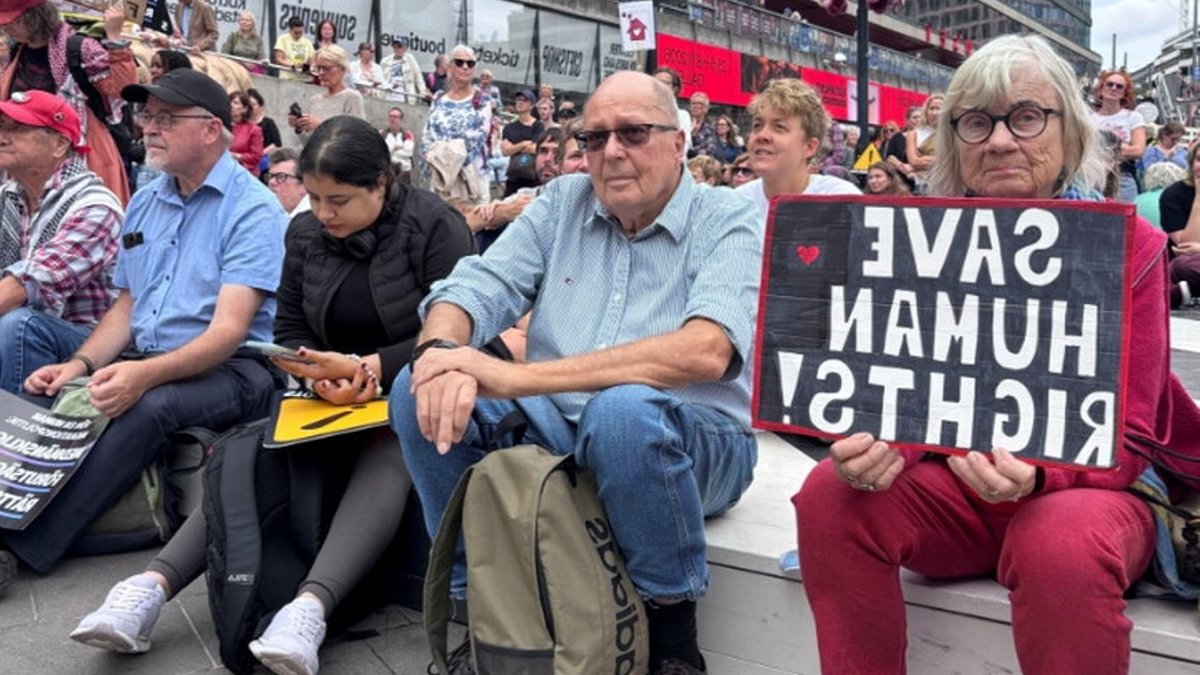
Swedish voters head to the polls on Sunday in a tightly contested election that has effectively become a referendum on the political future of the Sweden Democrats. The party, which has roots in the neo-Nazi fringe, is polling around 19% of the vote. This figure represents a significant shift from the party’s previous status as political pariahs to that of trusted partners in a nation once viewed as one of Europe’s most liberal societies. The outcome will determine whether the far-right group joins the government and cements its new role in Swedish politics.
The ruling centre-right minority coalition has vowed to bring the Sweden Democrats into its bloc. This move is intended to secure Prime Minister Ulf Kristersson a second term in office. “We have agreed to campaign on a platform of building a common, majority government and that I will lead that government,” Kristersson told reporters on the campaign trail in late August. The stakes extend beyond a simple change in leadership. The vote will reveal if Swedes wish to deepen a political shift that has already upended decades of consensus on immigration and national identity.
A Shift in Governance and Policy
Kristersson has credited his cooperation in parliament with Sweden Democrat leader Jimmie Akesson for delivering growth and lowering energy and food prices. He also points to reduced gang crime and record-low asylum numbers as evidence of this partnership’s success. Over the last four years, the government has abolished permanent residency for refugees and tightened welfare rules. These measures have included boosting expulsions of those without a right to stay. Asylum numbers have dropped to a 40-year low, a statistic that Kristersson says highlights the need to focus on integration next.
Read Also: Healthcare CIOs Focus on Epic Modernization Priorities
The Sweden Democrats intend to go further than the current government. Mattias Karlsson, a lawmaker and one of Akesson’s closest allies, told journalists that Swedish culture, language, laws, and norms apply in Sweden. “If you can’t accept that, you have to find somewhere else to live,” Karlsson stated. This stance marks a distinct departure from the broader consensus on tight immigration policies that many Swedes still feel uneasy about. Despite the polling showing a knife-edge vote, the centre-left opposition holds a small but narrowing lead. This bloc is backing Social Democrats leader Magdalena Andersson for prime minister.
For the many households currently grappling with the cost-of-living crisis, the normalization of these policies signals a potential end to the political hesitation that has characterized the last decade. The convergence of both major blocs on issues like welfare and support for Ukraine suggests that the ideological distance between them is shrinking. Voters may find that their choice is less about left versus right and more about the speed at which these new, tougher standards are implemented. The political center of gravity appears to be moving, and the electorate’s reaction will define the next phase of this transition.
Reactions from the Opposition
Many in the opposition remain deeply concerned about the implications of bringing the far right into the fold. Birgitta Ohlsson, a former European Affairs minister and current Center Party lawmaker, warned of the consequences. “If the Sweden Democrats enter government, that would have an enormously negative impact on the liberal ideals of our country,” she said. Ohlsson noted that the effects have already been visible while the party was outside government. She argued that the situation would be ten times worse if they held formal power.
Read Also: Key Questions on Vibe Coding Security in Healthcare
Even if Andersson wins, she faces a daunting task in building a stable coalition.
Broader European Context
The rise of the far right has fundamentally altered the political alignment across the continent. Such parties are already sharing power in countries including Finland, Italy, Croatia, and the Czech Republic. They pose growing challenges in France and Germany. Analysts suggest the Swedish election may be less a watershed moment than a recognition of Akesson’s success in shedding the party’s extremist baggage. The party apologized in 2025 for past neo-Nazi and antisemitic views. Jan Guillou, an author and political commentator, described the election as a referendum on whether Sweden continues down a far-right path.
Lars Tragardh, a historian and author, expects a continued normalization of the Sweden Democrats. “It’s time to tone down the hysteria,” he said. Critics, however, fear that promises to end multiculturalism and restore traditional Swedish values could deepen social divisions. Kurdo Baksi, an author and anti-racism campaigner, expressed worry about the potential impact on press freedom and the right to demonstrate. He spoke on the sidelines. “I’m afraid more people will be expelled,” Baksi said. The election results on Sunday will clarify whether this normalization is accepted or if voters push back against further shifts in the political center.