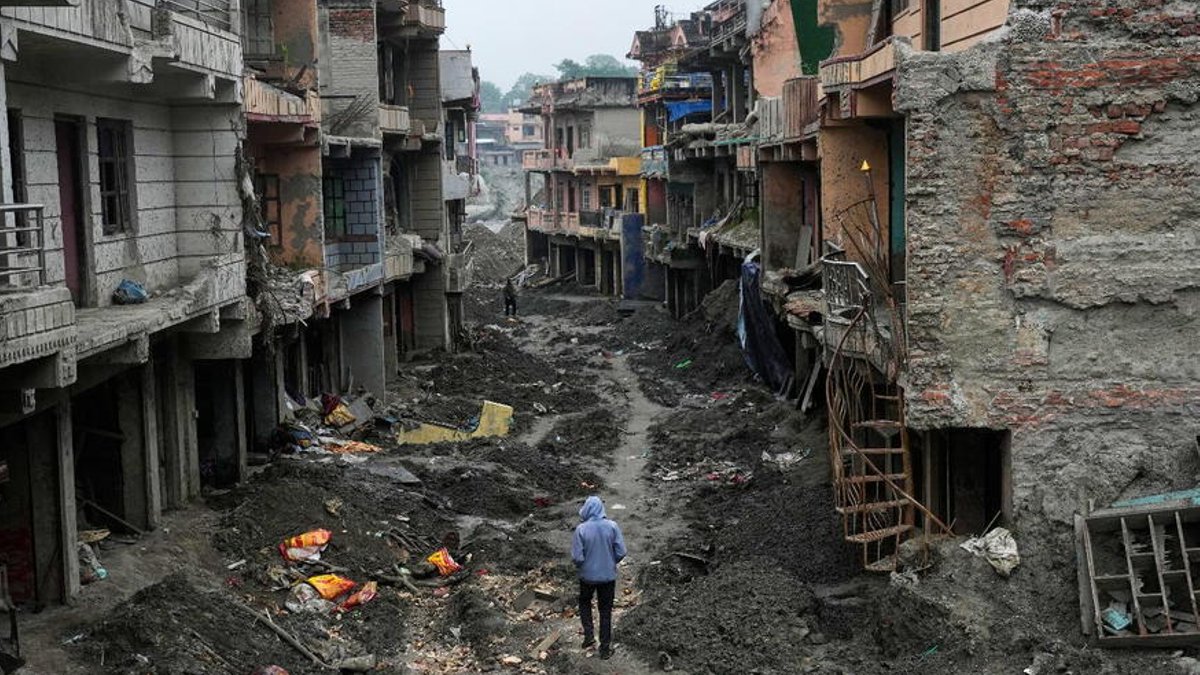
In the aftermath of the devastating floods that swept through Nuwakot, Nepal, in August, survivors are left coping with the loss of homes, farms, schools and even sacred temples. The disaster claimed thousands of lives and left many missing, bringing everyday activity to a halt across the valley and its surrounding hills.
Along the Trishuli River, the wreckage remains stark: power lines, solar panels and the frames of houses are half-buried in sludge. Broken bridges cut off villages from the nearest market towns, forcing residents to travel on foot for miles. One survivor, Lakchin Bahadhur Tamang, who works at a local hydropower plant, now sleeps in a makeshift metal shelter. He relies on donations for drinking water, cooked meals and basic medical supplies, while aid trucks struggle to reach the isolated hamlets.
“God knows how long we will have to stay here,” the 45-year-old hydropower worker told The Associated Press on a recent morning, expressing uncertainty about when basic necessities will become secure.
Nepal’s Plea for Climate Resilience at COP31
At the U.N. climate summit in Turkey, known as COP31, the nation and other mountain states pressed for swift measures to curb the growing danger from global temperature rise. Delegates highlighted the rapid retreat of Himalayan glaciers and warned that melting ice threatens water supplies, agriculture and power generation for millions downstream.
The group is urging the creation of a dedicated negotiating agenda item on warming in high-altitude regions, arguing that the challenges differ from those faced by low-lying coastal areas. Nepal‘s foreign minister, Shisir Khanal, said the world must turn sympathy into a concrete system that can deliver resources to villages like those devastated in Nuwakot.
Glaciers and seasonal snow in the Hindu Kush Himalaya region feed rivers that provide drinking water, irrigation for crops and hydroelectric power for almost 2 billion people. Accelerating warming is destabilizing steep slopes, increasing the likelihood of landslides and flash floods that can surge across borders before alerts can be issued.
Read Also: Scotland publishes infection control plan
As average temperatures climb beyond the 1.5-degree Celsius limit set by the 2015 Paris Agreement, experts at the summit stressed the need for robust early-warning networks, shared data across nations and a reliable flow of international money to help vulnerable communities adapt.
The U.N. Fund for Responding to Loss and Damage, created in 2022, is meant to channel financial aid to countries suffering climate-related harm. For the flood-hit nation, the fund has earmarked roughly $20 million. Nepal’s foreign minister, Shisir Khanal, has said rebuilding after the disaster would cost about one-tenth of Nepal’s economy.
Its establishment followed protracted negotiations over how much wealthier nations—particularly the United States, identified as the top historical polluter—should contribute to help poorer countries adapt to a climate they helped create, despite having contributed little to the problem.
Manjeet Dhakal, a member of Nepal’s delegation and lead adviser to least developed countries at COP, welcomed the fund’s initial response but said that “the scale of the resources needs to increase.”
Countries have pledged more than $820 million to the fund, while it faces 176 requests for support from developing nations totaling about $2.8 billion. The fund’s board members will meet in December to consider more support requests.
Readers can find AP’s standards for working with philanthropies, a list of supporters and funded coverage areas at AP.org.