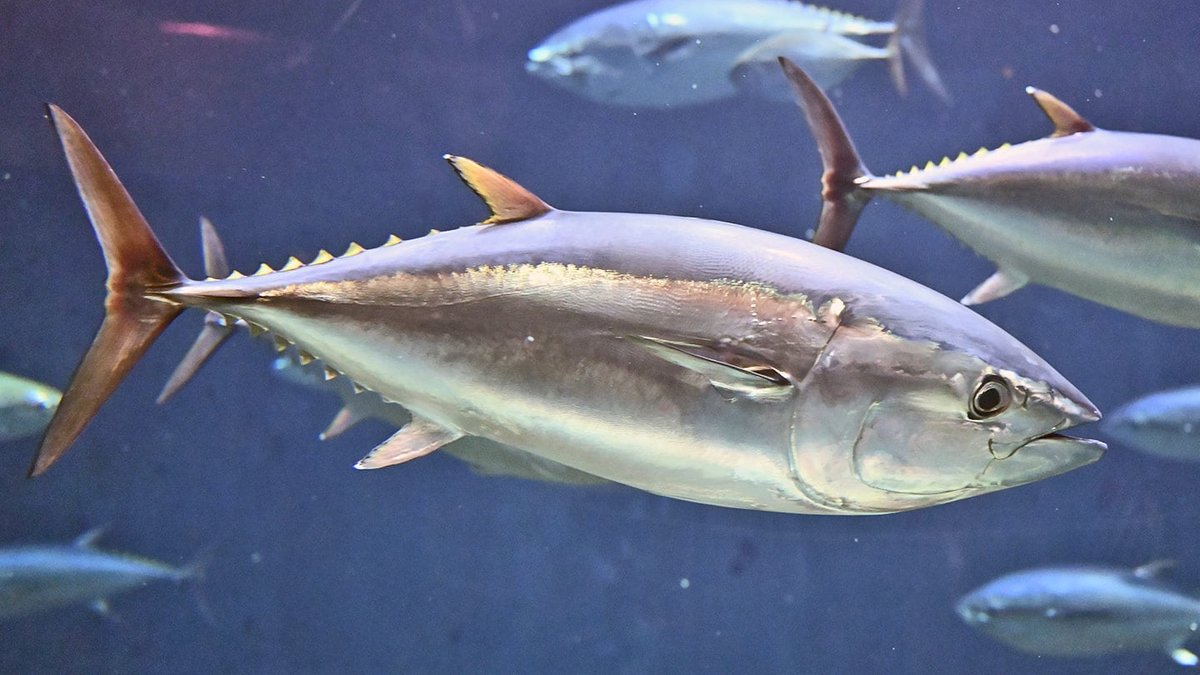
New research challenges the idea that the asteroid that killed the dinosaurs directly spurred the evolution of tunas, showing instead that these fast, warm‑blooded fishes developed their hallmark traits over a span of roughly 50 million years.
Study links tuna evolution to gradual changes, not a sudden event
Scientists from Yale University and collaborating institutions constructed a detailed time‑calibrated phylogeny of the Scombridae family, which includes tunas, mackerels and other related species. By merging DNA sequences with fossil records, the team traced the lineage back to the Cretaceous‑Paleogene (K‑Pg) boundary, roughly 66 million years ago.
While the tree’s root sits close to the asteroid impact, the analysis reveals that key adaptations—large body size and endothermy, the ability to maintain a higher internal temperature—appeared well after the extinction event. The study notes three independent gains of endothermy within Scombridae, with at least two occurring 10 to 15 million years later.
“Our results show the K‑Pg extinction did not trigger the evolution of tunas and related large, endothermic predators,” said Chase Brownstein, a graduate student in ecology and evolutionary biology at Yale and lead author of the paper. “We show that the body plans of these predators evolved over tens of millions of years and that there is no connection between the origins of endothermy and large body sizes in these lineages.”
The findings also suggest that increases in body size were not synchronized with the emergence of endothermy. Instead, size changes occurred sporadically across different branches of the family tree, indicating that multiple selective pressures shaped tuna evolution.
The study reshapes long‑held ideas.
Related: Fast test spots deadly tick disease in minutes
Implications for fisheries and human health research
Understanding the evolutionary pathways of tunas has practical relevance. Thomas Near, senior author and professor of ecology and evolutionary biology at Yale, noted that knowledge of how these fish regulate metabolism may inform studies of human health conditions such as obesity and diabetes. He added that while the link is indirect, comparative biology can illuminate metabolic mechanisms.
Conservationists also stand to benefit. Populations of Atlantic bluefin tuna, a commercially valuable species, have declined sharply due to overfishing. Insight into the long‑term evolutionary resilience of tunas could guide management strategies aimed at preserving genetic diversity and ecosystem roles.
Data for the phylogeny came from tissue and DNA samples housed at several institutions, including the Yale Peabody Museum.
Comparing this scenario to other post‑extinction recoveries shows a pattern: not all major groups exploit vacant niches immediately. For instance, after the K‑Pg event, mammals diversified over millions of years rather than exploding in a single generation. The tuna case reinforces the view that evolutionary innovation often proceeds gradually, even when ecological opportunities arise.
The paper appears in the journal Proceedings of the Royal Society B.