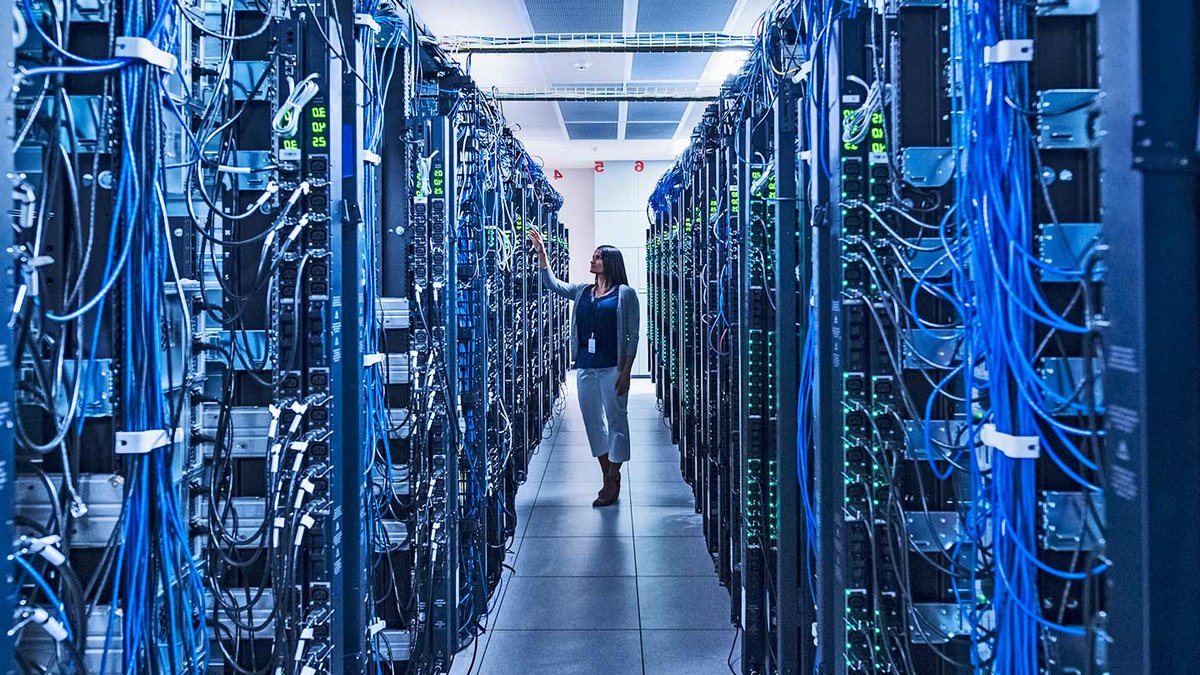
Artificial intelligence is driving a rapid increase in data center construction across the United States, with over 2,700 facilities either active or in development. These projects involve billions in capital investment, though recent research indicates their economic advantages are not evenly distributed and tend to concentrate in metropolitan areas.
Daniel Yue and Yiyang Zeng at Georgia Tech’s Scheller College of Business examined how data center openings influence local employment, wages, business activity, and electricity prices. Their study, using facility-level data and county-level economic outcomes, highlights a sharp contrast between urban and rural impacts.
Metro areas see stronger gains
Counties hosting a new data center experience noticeable improvements within three years. Employment increases by 0.9%, wages by 1.1%, and business establishments by 1.0%. Household income rises by 0.7%. Over time, the overall impact becomes larger, reaching 3.5%, 5.0%, and 4.7%, respectively.
The benefits remain modest relative to the investment size. Cities capture most advantages due to economic clustering. Data centers depend on construction contractors, engineers, and professional services, which are more accessible in urban areas with deep labor markets and established networks.
High-paying technical workers spend locally, boosting restaurants, retail, and services. Suppliers and contractors can scale operations quickly. Rural areas, however, see far weaker spillover effects. Facilities there often employ relatively few permanent workers—often fewer than 100—and many specialized services are imported from outside the county. As a result, the investment does not typically translate into broad employment and wage gains.
Rural areas do see some advantages. The research finds a small but measurable decline in unemployment rates in non-metro counties, and local governments may still gain tax revenue or infrastructure investments. But the sweeping job and wage growth often promised during local recruitment efforts is unlikely to arrive on its own.
Who bears the costs?
The impact of higher electricity prices varies. Local utilities distribute costs differently among homeowners, businesses, and industrial users, including data centers. These arrangements depend on state regulations, making each development’s effect unique.
For cities with strong labor markets, data centers can provide meaningful economic benefits. For rural communities, the equation is less straightforward. The advantages may not outweigh the strain on local infrastructure or the increased costs passed to residents.
As construction continues, policymakers and community leaders must carefully evaluate the trade-offs. The findings suggest that without dense business networks, a skilled workforce, and fair cost-sharing, data centers may fail to deliver the expected economic boost.
“It’s the characteristics of the host community, not just the facility opening there,
This trend aligns with broader shifts in digital health growth, where targeted investments are reshaping infrastructure demands.