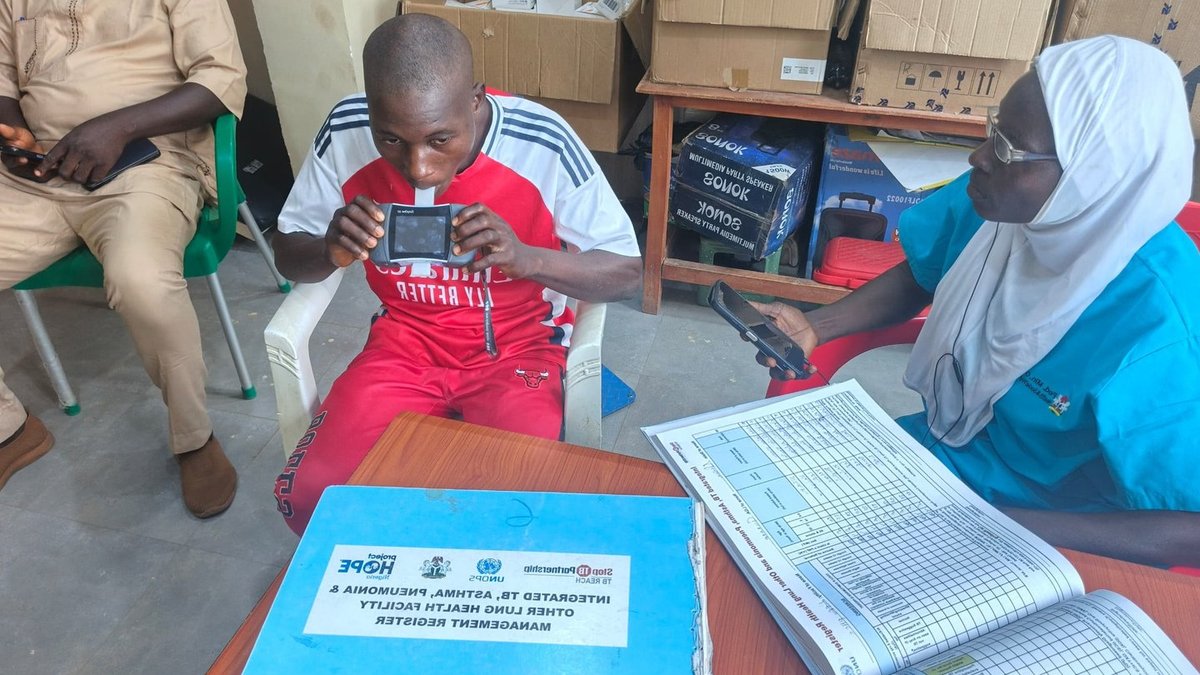
Primary healthcare centres in Niger State are screening patients for respiratory conditions beyond tuberculosis, a model that has led to thousands of additional diagnoses but faces sustainability challenges. Supported by the Stop TB Partnership, Project HOPE’s EXALT project introduced combined screening for TB, asthma, and pneumonia at 15 PHCs across the Gurara, Paikoro, and Suleja Local Government Areas. The intervention aimed to address a basic gap in the system, where patients arriving at a PHC often did not know whether a persistent cough was caused by TB, asthma, pneumonia, or another condition.
Expanding the scope of respiratory care
Health workers at the participating facilities asked patients about common respiratory symptoms, including cough, fever, weight loss, night sweats, and breathlessness. Depending on the findings, patients were connected to condition-specific assessment, sample transport, or referral. The approach aligns with the World Health Organization’s Practical Approach to Lung Health, which promotes the integrated management of respiratory symptoms. For people showing signs of TB, health workers used rapid molecular tests like Xpert MTB/RIF Ultra or Truenat, following current WHO guidance and Nigeria’s linked pathway for diagnosis.
Assessing asthma often involves spirometry or measuring peak expiratory flow rates, whereas chest radiographs support screening or sorting patients. Doctors evaluating pneumonia must also consider the patient’s age and how sick they are. The aim has been to widen disease detection efforts while keeping standards high. Safiya, a teenager who suffered from a chronic cough for six years and faced social judgment, found treatment through community visits. Her situation highlights the benefit of conducting screenings outside facility walls.
“What I see today in terms of results and outcomes from this project is amazing. I have never seen such a transformation in a Lung health programme like the one implemented by Project HOPE in Niger State,” said Dr Hananiya Dauda, a WHO National Professional Officer. “It has provided more opportunities for people to be reached, diagnosed, and catered to. This is what public health is all about.”
Screening numbers climb, but infrastructure lags
Initial evaluations showed major issues with infrastructure at the PHCs involved. Out of the 15 centers, none possessed GeneXpert machines, 46 percent were missing functional microscopes, and not a single one held a spirometer or nebulizer. Although connection plans were in place, the flow of samples and feedback was not steady. During the period from October 2023 to September 2024, the report for the 15 sites logged 24 TB cases, 26 pneumonia instances, and 20 asthma diagnoses.
Project HOPE indicates that over 113,000 individuals underwent screening between March 2025 and June 2026. In that time, the program treated 259 patients for TB, 783 for pneumonia, and 335 for asthma. While this rise is striking, it should not be viewed as definitive proof that integration caused these numbers. The approach functions effectively only when back-end systems are operational, necessitating dependable hardware, regular sample shipping, and the presence of drugs and lab supplies.
Ensuring the model endures
For Zariya, who was pregnant when she was diagnosed with tuberculosis in the Napu community, the chain from diagnosis to counselling and treatment eventually held. She was very happy when she was told her sample had turned negative after 6 months of treatment. The test of the model is whether Niger State can make that chain reliable for the next pregnant woman, and for every patient whose cough may point to more than one disease beyond project support.