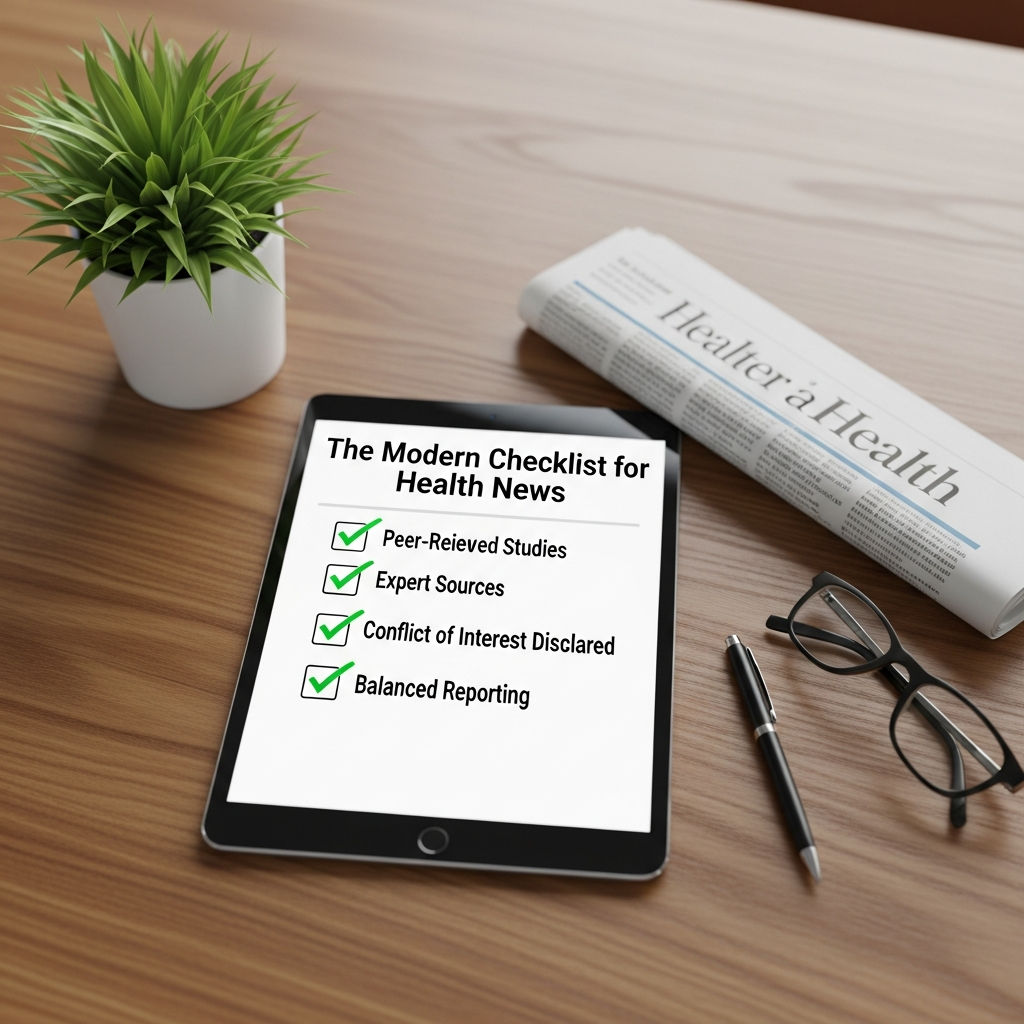
The Modern Checklist for Health News: How to Navigate the Infodemic
In an era where information travels at the speed of a click, staying informed about your health has never been easier—or more dangerous. We are currently living through what the World Health Organization calls an “infodemic”: an overabundance of information, some accurate and some not, that makes it hard for people to find trustworthy sources and reliable guidance when they need it most.
From social media influencers promoting “miracle” supplements to sensationalist headlines claiming a new “cure” for chronic diseases, the landscape of health news is a minefield. To protect your well-being and make informed decisions, you need more than just an interest in wellness; you need a critical framework. This modern checklist for health news is designed to help you separate scientific fact from viral fiction.
1. Source Authority: Who is Telling the Story?
The first step in evaluating any health claim is identifying the source. Not all platforms are created equal. A blog post on a lifestyle website does not carry the same weight as an article from a university hospital or a government health agency.
Check the Author’s Credentials
Is the article written by a journalist specializing in science, or is it a general lifestyle writer? More importantly, does the article cite experts? Look for quotes and insights from medical doctors (MDs), registered dietitians (RDs), or PhD researchers in relevant fields. If a “health guru” without formal medical training is the primary source, exercise extreme caution.
Evaluate the Platform
Reliable health news typically originates from peer-reviewed journals (like The Lancet, JAMA, or the New England Journal of Medicine), reputable news organizations with dedicated health desks, or academic institutions. If the website’s primary goal is to sell you a product mentioned in the article, you are looking at an advertisement, not news.
2. The Hierarchy of Evidence: Not All Studies Are Equal
Headlines often scream, “Study Finds Coffee Prevents Heart Disease,” but they rarely explain *how* that study was conducted. Understanding the hierarchy of evidence is crucial for your modern health news checklist.
- Animal and Cell Studies: These are “pre-clinical.” While they are vital for science, what happens in a lab mouse or a Petri dish rarely translates perfectly to a human body. If a study hasn’t been tested on humans, it is not a recommendation for your life yet.
- Observational Studies: These look at large groups of people and find correlations. For example, people who eat blueberries might have lower blood pressure. However, correlation does not equal causation. Perhaps blueberry eaters also exercise more?
- Randomized Controlled Trials (RCTs): This is the gold standard. Participants are randomly assigned to a treatment or a placebo. This minimizes bias and helps prove that the treatment actually caused the result.
- Systematic Reviews and Meta-Analyses: These are the most powerful. They look at dozens of different studies on the same topic to see if the overall weight of evidence supports a conclusion.
3. Sample Size and Duration: The Power of “n”
In statistics, “n” represents the number of participants in a study. A study with an “n” of 10 people is a pilot study at best; its results could be a fluke. A study with an “n” of 10,000 is much more likely to be representative of the general population.
Similarly, consider the duration. A weight-loss drug that works over six weeks might show “rebound” effects after six months. If a health news story doesn’t mention how many people were involved or how long the study lasted, it’s missing vital context.
4. Peer Review: The Scientific “Background Check”
Before a legitimate scientist publishes their findings, they must go through the peer-review process. This means other independent experts in the field have reviewed the methodology, data, and conclusions to ensure they are sound. Beware of “pre-prints”—studies released before peer review—especially those that go viral during public health crises. They have not yet been vetted for errors.
5. Follow the Money: Funding and Conflicts of Interest
Science is expensive, and someone has to pay for it. However, the source of funding can sometimes introduce bias. A study on the benefits of dark chocolate funded by a major candy manufacturer isn’t necessarily “fake,” but it does require extra scrutiny.
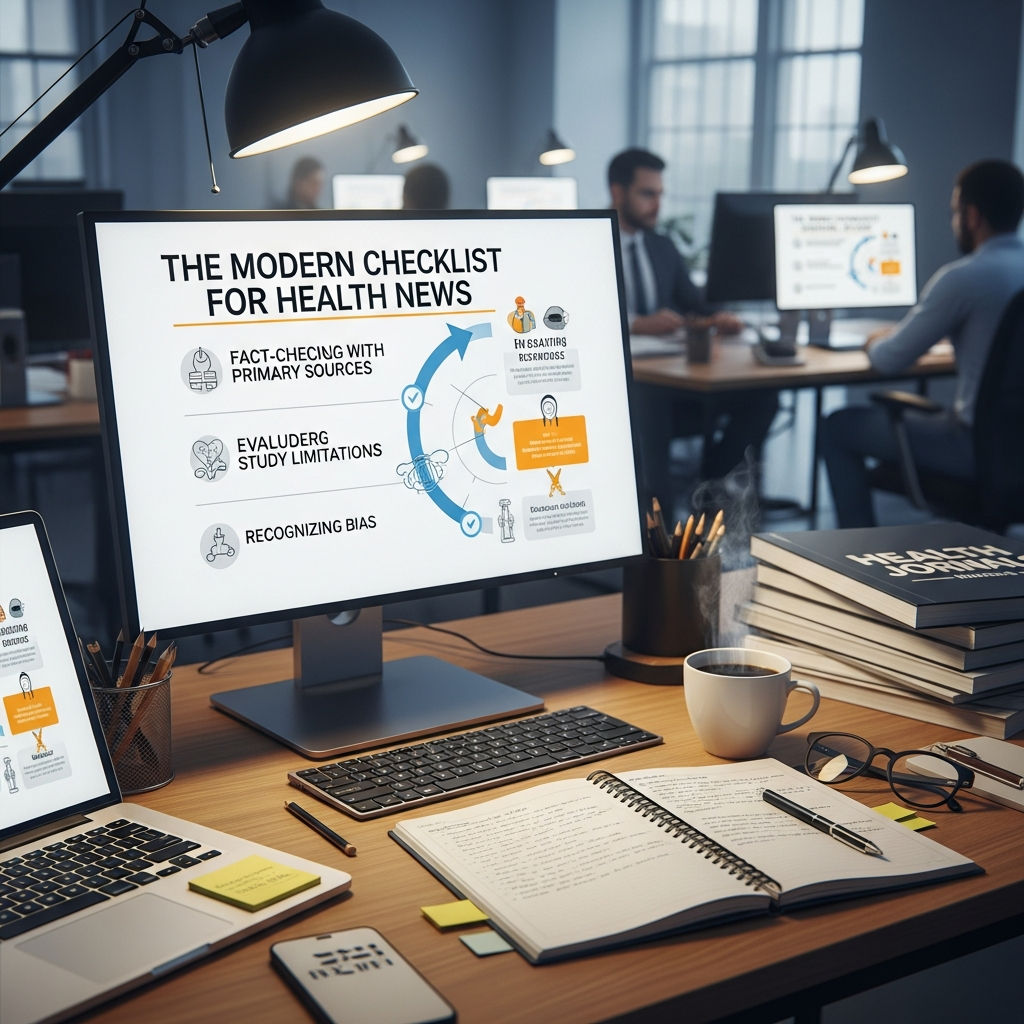
Reputable journals require authors to disclose “Conflicts of Interest.” Look for these disclosures. If an article doesn’t mention who funded the research, or if the author stands to profit from the findings, take the information with a grain of salt.
6. Beware of “Miracle” and “Secret” Language
Science is incremental. It moves forward in small, cautious steps, rarely in giant leaps. The modern checklist for health news should include a “red flag” list for specific words and phrases:
- “Miracle Cure”: True medical miracles are exceptionally rare. Science uses words like “efficacious” or “statistically significant.”
- “Doctors Hate This”: This is a classic clickbait trope designed to create a “us vs. them” mentality.
- “Secret” or “Hidden”: Scientific discovery is about transparency and publication. There are no “hidden” secrets in mainstream medical research.
- “Revolutionary Breakthrough”: While breakthroughs happen, they are usually the result of 20 years of prior research, not a sudden discovery.
7. The Context: Is it a Consensus or an Outlier?
One study does not make a truth. Science is built on replication—meaning other scientists should be able to run the same experiment and get the same result. If a news report claims something that contradicts decades of established medical consensus (e.g., “Vaccines are ineffective” or “Smoking is healthy”), it is almost certainly an outlier or based on flawed data.
Check if major health organizations like the CDC, the NHS, or the Mayo Clinic have commented on the topic. If they haven’t updated their guidelines, the “news” likely isn’t strong enough to change clinical practice yet.
8. Absolute vs. Relative Risk
This is where health news often becomes misleading. A headline might say, “Eating Processed Meat Increases Your Cancer Risk by 20%!” This sounds terrifying. This is **relative risk**.
However, if the **absolute risk** of getting that specific cancer is 1 in 100, a 20% increase means the risk is now 1.2 in 100. Still an increase, but much less frightening than the headline suggests. Always look for the absolute numbers to understand how the news actually affects your personal risk profile.
9. The “Practicality” Test: Is it Actionable?
Finally, ask yourself: “What can I actually do with this information?” If the news is about a drug that won’t be on the market for ten years, or a diet that requires eating a rare fruit from a specific mountain range, it isn’t practically useful. High-quality health news should provide actionable, realistic advice that you can discuss with a healthcare professional.
Summary Checklist for Quick Reference:
- Who: Is the author an expert? Is the site reputable?
- Where: Was it published in a peer-reviewed journal?
- What: Was it a human trial or an animal study?
- How Many: Was the sample size (n) large enough?
- Why: Who funded the study? Are there conflicts of interest?
- Language: Does it use sensationalist “miracle” words?
- Consensus: Does this align with what major health bodies say?
Conclusion: Become Your Own Health Advocate
In the digital age, being a passive consumer of health news is no longer an option. By using this modern checklist, you transform from a target for clickbait into an informed health advocate. Remember, the goal of health news should be to empower you, not to scare you or sell you a quick fix.
The next time you see a shocking health headline, don’t reach for your credit card or change your entire lifestyle immediately. Instead, reach for your checklist. Read the fine print, look for the data, and most importantly, consult with your doctor before making any significant changes to your health regimen. Critical thinking is the best supplement you can take for your long-term well-being.