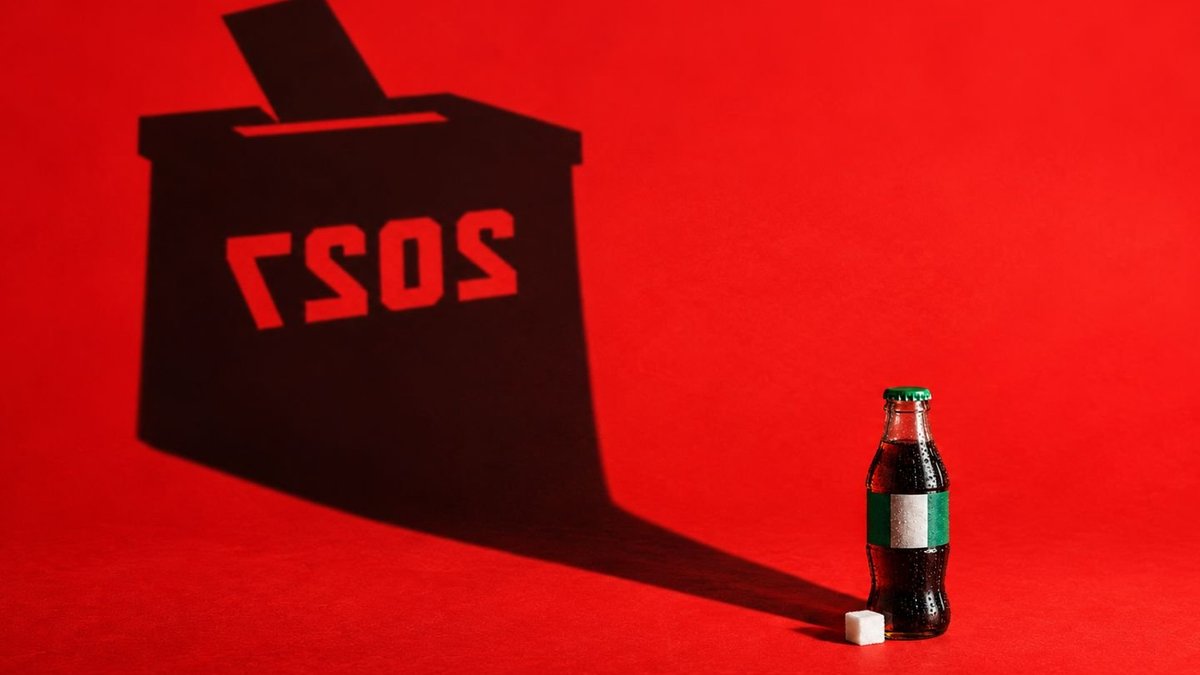
Nigeria’s Senate has passed two measures on health tax reforms, but their passage now depends on the House of Representatives before the 2027 elections limit the legislative timeline.
The first bill, the National Health Act (Amendment) Bill, 2026, proposes increasing the Basic Health Care Provision Fund’s share of the national budget from 1% to 2% of the Consolidated Revenue Fund. In April 2026, the Senate passed this measure, which has since received its first reading in the House. This adjustment would double the statutory allocation to the BHCPF, although the exact distribution method remains unspecified.
A second measure looks at how health-related revenue could be raised, and where some of it should go. In June 2026, the Senate passed an amendment to the Customs, Excise Tariff, etc. (Consolidation) Actthat would replace the current ₦10-per-litre excise duty on sugar-sweetened beverages (SSBs) with a percentage-based levy linked to retail price. The Bill specifies that part of the revenue would be directed toward health promotion, disease prevention, primary healthcare, and health insurance for poor and vulnerable Nigerians. Both bills still require House approval before moving to the presidency.
Inflation erodes fixed SSB tax’s impact
The current ₦10-per-litre SSB tax, introduced in 2022, has diminished in value due to inflation, weakening its intended impact on consumption. Four years after its introduction, the rate remains unchanged at ₦10 per litre, while prices have risen substantially, eroding the tax’s real value. This is the challenge that health tax policy aims to avoid, ensuring the value of health taxes keeps pace with changing prices. The World Health Organization’s 3 by 35 Initiative calls for countries to raise the real price of harmful products by at least 50% by 2035. Its latest global assessment shows that at least 116 countries already apply a national excise tax to at least one type of sugary drink.
The WHO advocates for excise taxes based on product volume or unhealthy ingredients-such as sugar content-rather than retail value. These structures discourage manufacturers from reformulating products and more directly address affordability. Nigeria’s proposed system lacks these protections, raising questions about its effectiveness in reducing consumption. If Nigeria adopts a retail price-based levy, the rate-setting process must be transparent and strong enough to influence both prices and consumption.
Tobacco taxes lag behind regional standards
Cigarette taxation follows a different structure. The 2026–2028 fiscal plan includes a 30% ad valorem excise plus a specific tax increasing from ₦6 per stick in 2026 to ₦7 in 2027 and ₦8 by 2028. However, this falls below the ECOWAS minimum standard, which requires at least a 50% ad valorem rate and a specific tax of US$0.02 per cigarette (or US$0.40 per 20-pack). This discrepancy highlights inconsistencies in Nigeria’s health tax policies, where tobacco taxation remains below regional benchmarks despite stronger public health evidence.
Health taxes serve two key functions: reducing demand for harmful products and generating revenue for public health programs. In Nigeria, these revenues are not systematically directed toward health financing. Out-of-pocket spending still accounts for 71.9% of total health expenditures, leaving millions without coverage. The National Health Insurance Authority (NHIA) reported in July 2026 that more than 22 million Nigerians were enrolled in health insurance, an important gain following years of very slow progress, but it still leaves a substantial coverage gap.